Going Out on Your Own
The second time freelance, it took me ONE YEAR! to transition from working for someone else to being my own boss. A transition like that is not just a physical preparation; it is also a mental and spiritual preparation. So take things at your own pace.
How I and Others Made the Transition 🎙
Resources
👉 For questions, leave them in the comment section below.
1. How I and Others Made the Transition
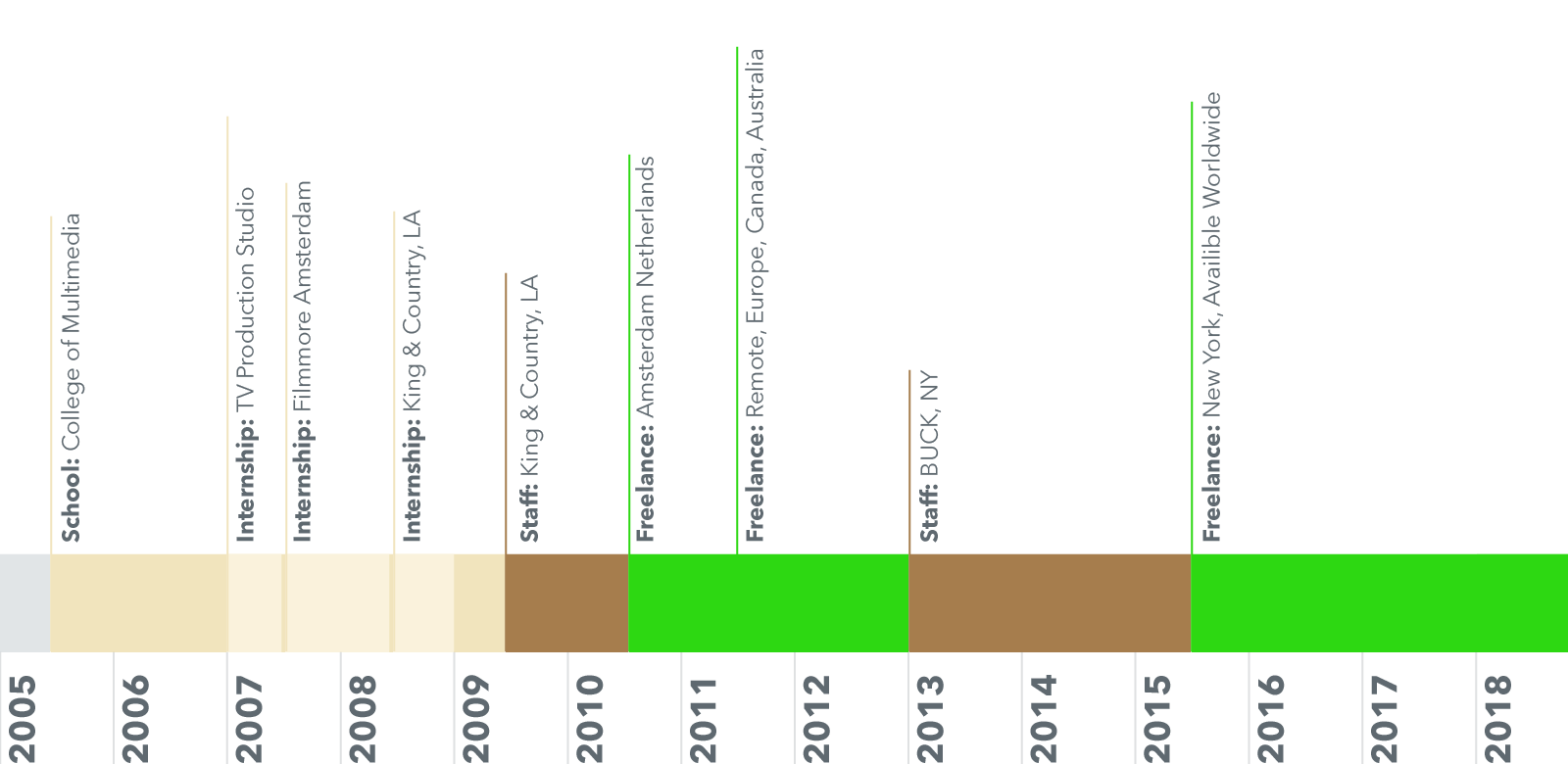
I’ve been freelance on and off for the last ten years and most currently have been freelance for over three years.
My last staff position was for a 2½ year period and at about 1½ years in I started to feel restless because my goals shifted. I wanted to do more personal projects, utilize more skills than just Motion Design and be selective of the clients I worked with.
The first thing I did was:
Take Time Off From Work to Refine My Goals
This allowed me to have a clear mind and really flesh out what I wanted to achieve by going freelance. I tried to imagine myself in a freelance position, which was easier to do when you don’t have to go to your regular job the next day. After you come back to your staff position from that break, see how you feel. For me, I knew the answer. I had set my goals and I felt the only way for me to achieve them was to go freelance. That brought me to my next step:
Prepare
After work, I began working on my portfolio site—putting up my latest work and taking a couple short-term freelance gigs on the side that I could work on during nights and weekends. This gave me a little bit of a taste of freelance; and also regained my confidence that I could book some jobs while in the U.S. At some point, I was getting at least a couple interesting projects every month—some that I couldn’t take because of my commitments to my staff position. But it was a good sign that my portfolio was attracting some work. In that time I also had to figure out my visa situation. I asked a few people who had been in a similar situation, and all were very helpful—from recommending lawyers to giving me a little peek into the process. However, I also started to think about a Plan B, because getting a visa can be challenging and is not always guaranteed.
Take More Time Off
After the foundation had been laid out, I felt more confident to take the jump, I really wanted to make sure I was ready to pull the trigger, so at the end of my foundational planning, I took off some more vacation time to re-visualize my time as a future freelancer. This felt a lot more real because I was making efforts to quit my job. When I got back to work, I could really feel it was time to go, so I turned in my one month’s notice and made sure I was leaving at a time when the projects I worked on were finished. You want to leave your position on a good note. Remember: your former job can be a future freelance client!
Let Reality Set In
Once you’re freelance, you’ll find the right tempo to “jump into it”. For me, I wanted to take a break so I decided to travel for a month in Europe with friends. (Note: Another good reason to build in some financial flexibility!) When I came back, my plan was to just work on personal projects and wait for a good project to come in—a project that I really wanted to work on. I knew I wouldn’t have to market myself too much because I had really worked a lot on putting my work out there, which I will talk more about in the next sections of the course.
A few jobs presented themselves within the first weeks, but they didn’t really resonate with me, although some of them had great budgets. I decided not to take them and keep my focus on personal projects. I was grateful I turned those down because after 1½ months, I had a really interesting project come in that resonated with me and totally aligned with my values. It was a two week gig for a company in Portland, and if I had taken those jobs earlier—I would have never been able to take this one—so I was glad that I held out! I packed up my stuff and headed out west to collaborate with the brand.
From there, my freelance career took off. Since that time, I’ve committed to prioritizing projects that really fit my values, which means narrowing my work opportunities even more—and setting up structures to reduce requests naturally, (which often means “training” clients to answer the questions I need in order to make an educated, informed decision if I want to take on that project or not. )....More on that in section 5 of the course.
But at least you see here, my thought process and the path that I took in order to go from staff to freelance. It might not be easy, but I have to say, the process—once you go through it and get through it-—is incredibly rewarding.
🎙 Second Perspectives
Claudio:
Kelli:
Aaron:
Ian:
2. Resources
📻 Podcasts
There is a number of great podcast episodes out there where people share their own journey, I've selected a few that stood out to me:
Conclusion
Where do new leads come from? How do we attract clients? the next lecture we'll dive into the main things that get your clients